

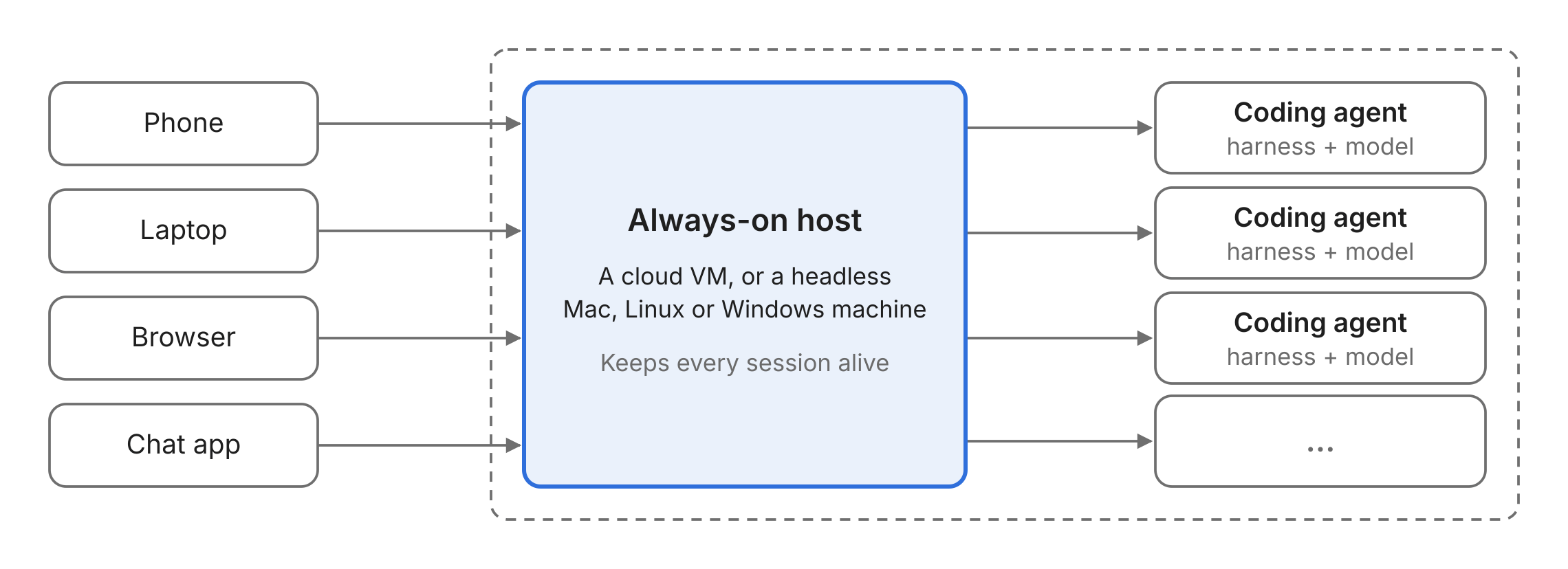
I think almost everyone has now figured out the best way to run coding agents: remotely, on a machine that never sleeps, so long-horizon tasks keep going after you close the laptop, and you can steer them from anywhere.
The first choice is yours: how much being model- and harness-agnostic matters to you.
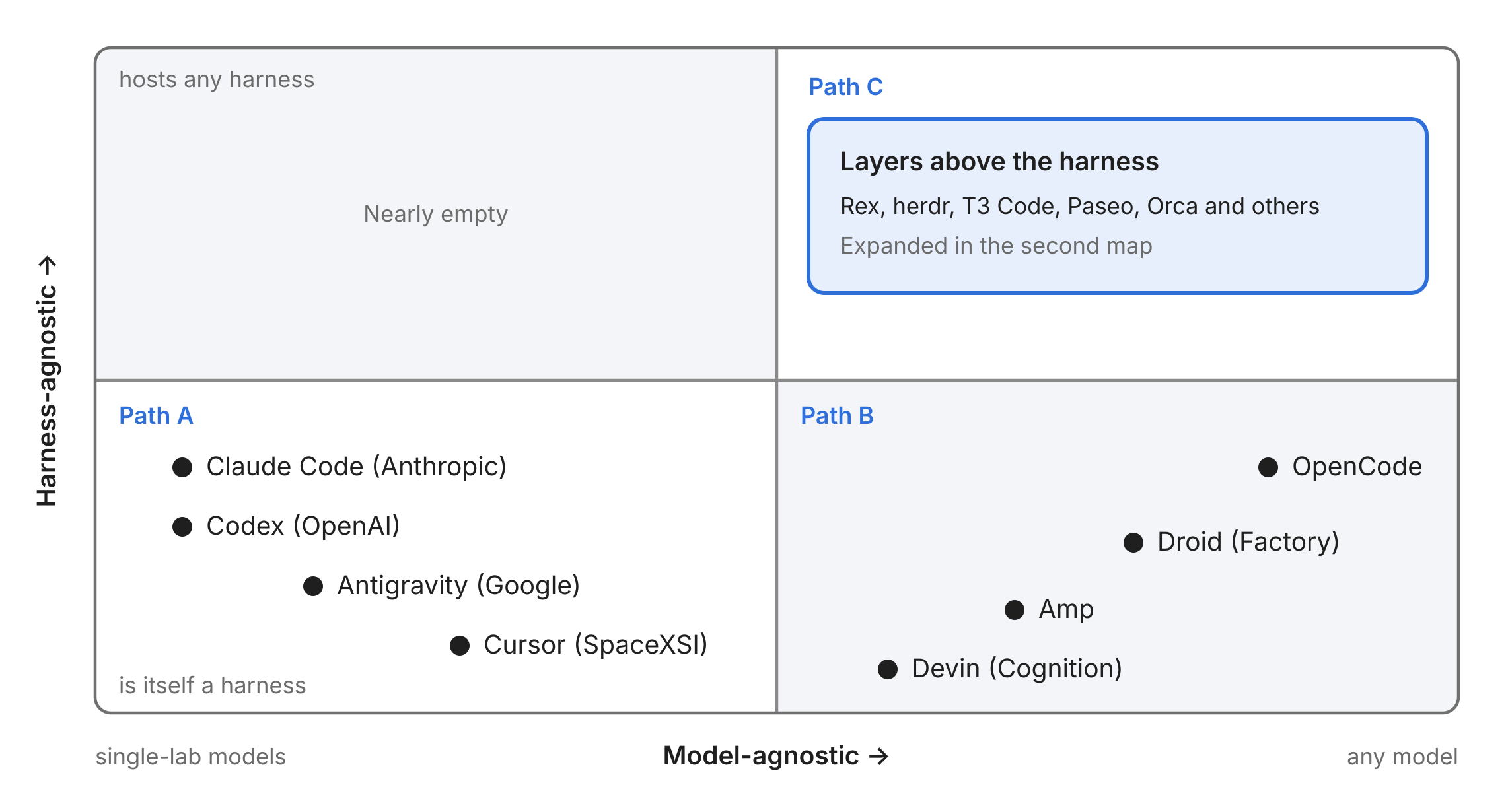
Path A: a lab’s own stack
The frontier labs offer nearly the same shape: their desktop app or CLI on any machine is the remote server, and their own app or web page anywhere is the client. No always-on host of your own? They also run the agent in their cloud.
In most cases, a lab’s own model in its own harness gets the most out of the model and is the easiest to set up.
Path B: a full stack that bets on model flexibility
These companies bet on model flexibility and build everything else themselves. Amp is the fullest example: its own harness with subagents and model routing, worktrees, projects, spaces where one agent coordinates the threads, and remote through runners on your machines or orbs in its cloud.
The test for this group is whether they can get the best out of frontier models, closed and open, as the lead keeps changing hands.
Path C: a layer above the harness
These products, often called agentic development environments (ADEs), are all multiplexers for coding harnesses, and each tries to win with a different position: how much workflow it adds on top, and which interface it puts in front of you.
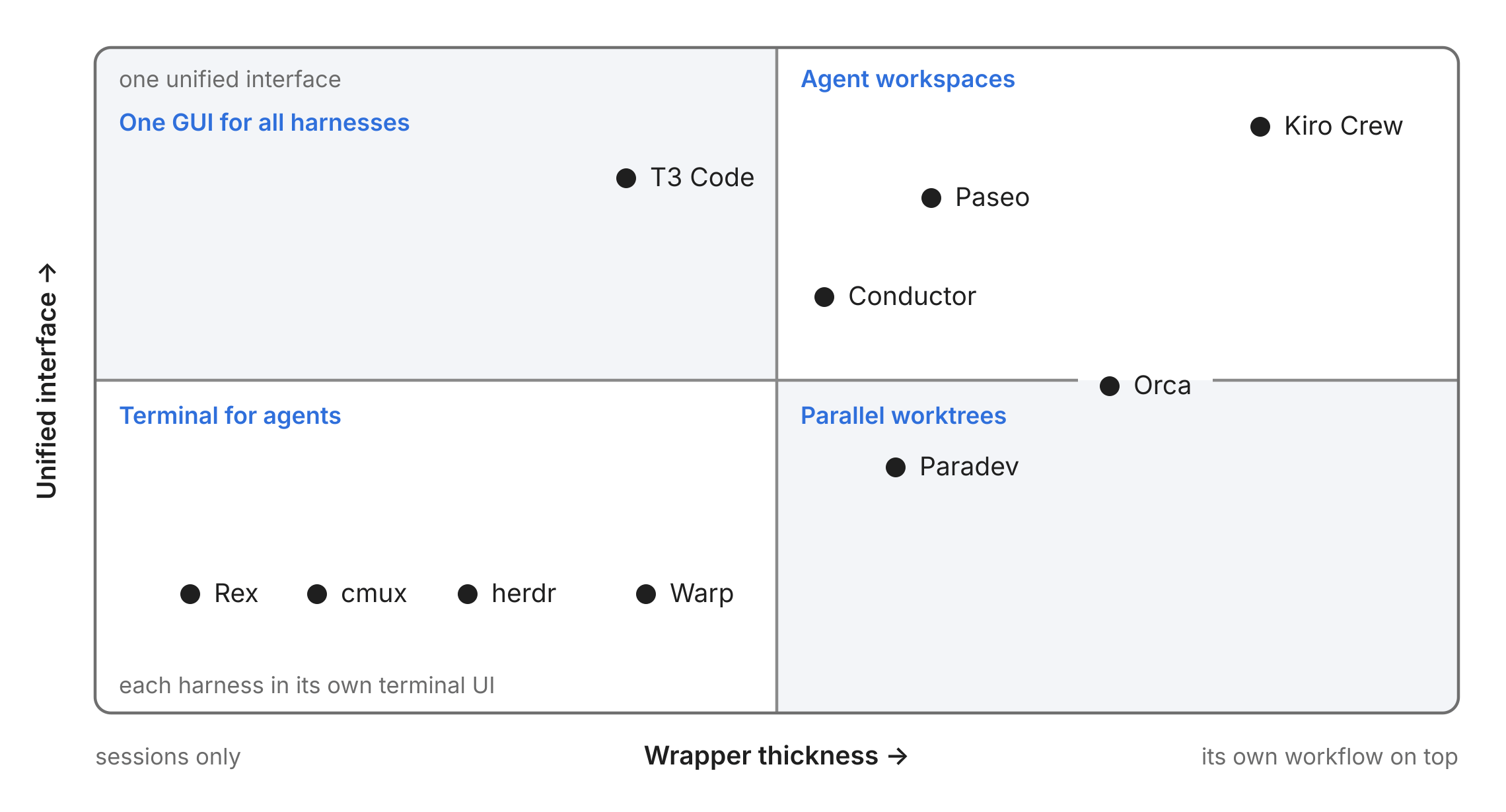
This is a selection. The same space holds a lot more smaller experiments.
How to choose
One lab’s models are enough: Path A.
One tool to try different models: Path B.
Maximum flexibility on both model and harness: Path C.
This map is already out of date
Like everything in AI, this changes daily. The next shift has started on all three paths, though adoption is still early: agents that manage the threads for you, so the multiplexer becomes something an agent operates rather than you. Claude Code Projects and Amp Spaces put one lead agent in front of each project. Orca, a Path C product, now leads its pitch with always-on bots in Slack, Linear and GitHub, already past what a multiplexer is.
My view on how the race plays out: if you own both the model and the harness, keep the two improving each other, because that loop sets the ceiling on intelligence. If you don’t, be open source and iterate relentlessly on community feedback. Your users are the heaviest agentic coders there are, and that is what they expect.